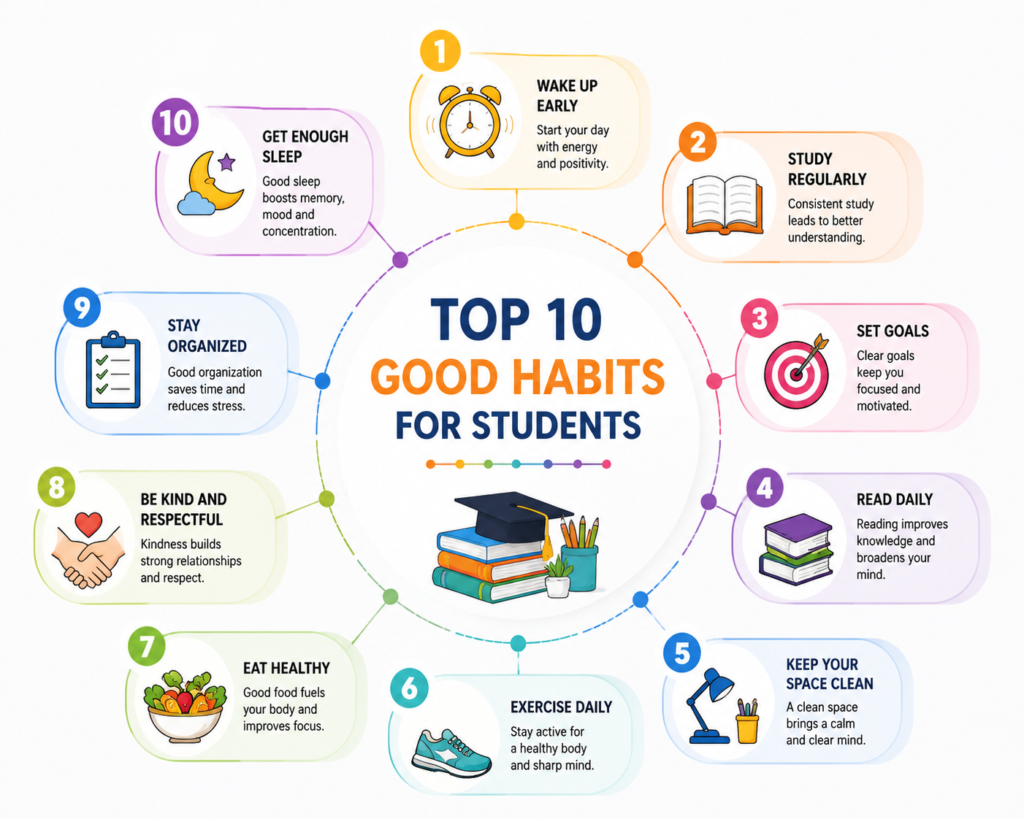
Developing good habits during school years is essential for success both in academics and personal growth. The habits that students cultivate early in life lay the foundation for discipline, responsibility, and resilience. Whether you are a parent, teacher, or student, understanding and implementing good habits for students at K.R. Mangalam World School Noida Extension, the best CBSE school in Greater Noida can significantly enhance learning efficiency, academic performance, and overall well-being. This article explores the top 10 good habits for students, providing examples, strategies, and tips to incorporate them into daily life.
1. Time Management
One of the most important good habits a student can develop is effective time management. Time is a limited resource, and using it wisely ensures that students can complete their tasks, revise lessons, and enjoy recreational activities without stress.
Practical ways to improve time management include:
- Creating a healthy habits chart that visualizes daily schedules.
- Prioritizing tasks based on deadlines and importance.
- Using planners or digital tools to track assignments and activities.
Even starting with small goals, such as implementing 2 good habits daily, can gradually lead to a disciplined routine. Students who master time management experience less stress and can focus more on learning effectively.
2. Maintaining a Regular Study Routine
A consistent study routine is essential for building knowledge and enhancing memory retention. Students should dedicate specific times each day for reading, revision, and homework. Consistency strengthens learning and prevents last-minute cramming, which often leads to poor retention.
For younger students, incorporating 5 good habits for class 1 or good habits for class 3 like daily reading and completing homework can create early academic discipline. Older students can write 10 good habits or write five good habits as part of their routine to reinforce structure and responsibility.
3. Cultivating Reading Habits
Reading is a vital good habit for students because it improves comprehension, expands vocabulary, and enhances analytical skills. Encouraging students to read a variety of materials—from textbooks to storybooks—can make learning enjoyable and enriching.
- Set aside a fixed time for reading daily.
- Encourage students to summarize what they read.
- Combine reading with discussions to improve understanding and communication.
Parents and teachers can also introduce good habits for kids by providing age-appropriate books and creating reading challenges to motivate children.
4. Personal Hygiene and Cleanliness
Maintaining personal hygiene and cleanliness is often overlooked but is an essential good habit. Students who take care of their appearance, wash hands regularly, and organize study materials are likely to feel more confident and focused.
Good habits and manners in hygiene also foster a positive classroom environment and reduce illness-related absenteeism. Schools can introduce visual aids such as healthy habits charts to encourage hygiene-related routines among students.
5. Active Participation in Class
Students should actively engage with teachers and peers during lessons. Active participation enhances understanding, critical thinking, and confidence. It also encourages collaboration and improves social skills.
Tips for fostering active participation:
- Ask questions when concepts are unclear.
- Volunteer for classroom activities and discussions.
- Listen attentively to peers and teachers.
By practicing these 5 good habits, students learn to interact respectfully, think critically, and build communication skills essential for lifelong learning.
6. Healthy Eating and Exercise
Physical health plays a significant role in academic success. Students who eat nutritious meals, stay hydrated, and engage in physical activity maintain higher energy levels and better concentration.
- Incorporate fruits, vegetables, and protein-rich meals in daily diet.
- Encourage daily exercise, sports, or outdoor play.
- Track wellness routines using a healthy habits chart.
These practices ensure that students can focus better in class and sustain energy throughout the day, forming essential good habits for students.
7. Setting Goals
Setting academic and personal goals helps students maintain focus and motivation. Students who define short-term and long-term objectives can prioritize tasks and measure progress effectively.
Practical ways to implement goal setting:
- Write daily, weekly, or monthly goals.
- Track achievements and reflect on areas of improvement.
- Reward yourself for achieving milestones.
Goal setting is part of the 10 good habits that contribute to academic growth and personal development. Even starting with 2 good habits daily related to goal-setting can create momentum for bigger achievements.
8. Limiting Screen Time
Excessive screen time can negatively affect concentration, sleep, and academic performance. Students should balance screen time with offline learning and recreational activities.
- Set fixed time limits for gadgets.
- Use digital tools for productive learning, not passive scrolling.
- Encourage hobbies like drawing, reading, or physical play.
Incorporating this as one of the good habits for students ensures that technology supports rather than hinders learning.
9. Respect and Social Skills
Respecting teachers, classmates, and peers is a fundamental good habit for students. Developing social skills, practicing empathy, and communicating politely improve the overall classroom environment and foster emotional intelligence.
- Greet teachers and peers respectfully.
- Share resources and help classmates when needed.
- Practice active listening during conversations.
Teaching good habits and manners early on ensures students grow into responsible, respectful adults capable of thriving in social and professional environments.
10. Curiosity and Lifelong Learning
A love for learning is one of the most valuable good habits a student can develop. Students who stay curious, explore new topics, and ask questions beyond textbooks demonstrate higher engagement and deeper understanding.
Ways to encourage curiosity:
- Participate in science projects, reading clubs, or debates.
- Explore online educational resources responsibly.
- Ask questions to clarify and expand knowledge.
Practicing curiosity regularly aligns with good habits for kids and motivates students to continue learning independently, forming a strong foundation for lifelong education.
Additional Tips for Students
- Start Small: Begin by practicing 5 good habits daily, gradually expanding to 10 good habits for students.
- Track Progress: Use healthy habits charts to monitor study routines, hygiene, nutrition, and physical activity.
- Use Quotes for Motivation: Encourage students with good habits quotes like, “Discipline is the bridge between goals and accomplishment.”
- Adjust by Age: For young children, emphasize 5 good habits for class 1 and good habits for class 3; older students can practice all 10 good habits.
- Combine with Rewards: Positive reinforcement helps students stick to their routines and remain motivated.
Why Good Habits Matter
Good habits not only improve academic performance but also enhance physical and emotional health, social skills, and lifelong success. Students who adopt good habits for students are better prepared to face challenges, manage stress, and excel in both school and life.
By incorporating routines like daily study, reading, goal-setting, hygiene, and social skills, students develop a balanced lifestyle. The process can begin with write good habits or write five good habits exercises, making habits tangible and trackable.
Conclusion
Developing the top 10 good habits for students is essential for success in academics and personal growth. Habits like time management, consistent study routines, reading, hygiene, goal-setting, and curiosity form the backbone of disciplined, motivated, and confident learners. By combining these habits with tools like healthy habits charts and motivational good habits quotes, students can cultivate a productive, balanced, and rewarding learning lifestyle.
Whether starting with 2 good habits or gradually building up to 10 good habits for students, consistency and reinforcement are key. Parents, teachers, and students themselves must work together to instill these habits, ensuring lifelong learning, personal development, and academic excellence.