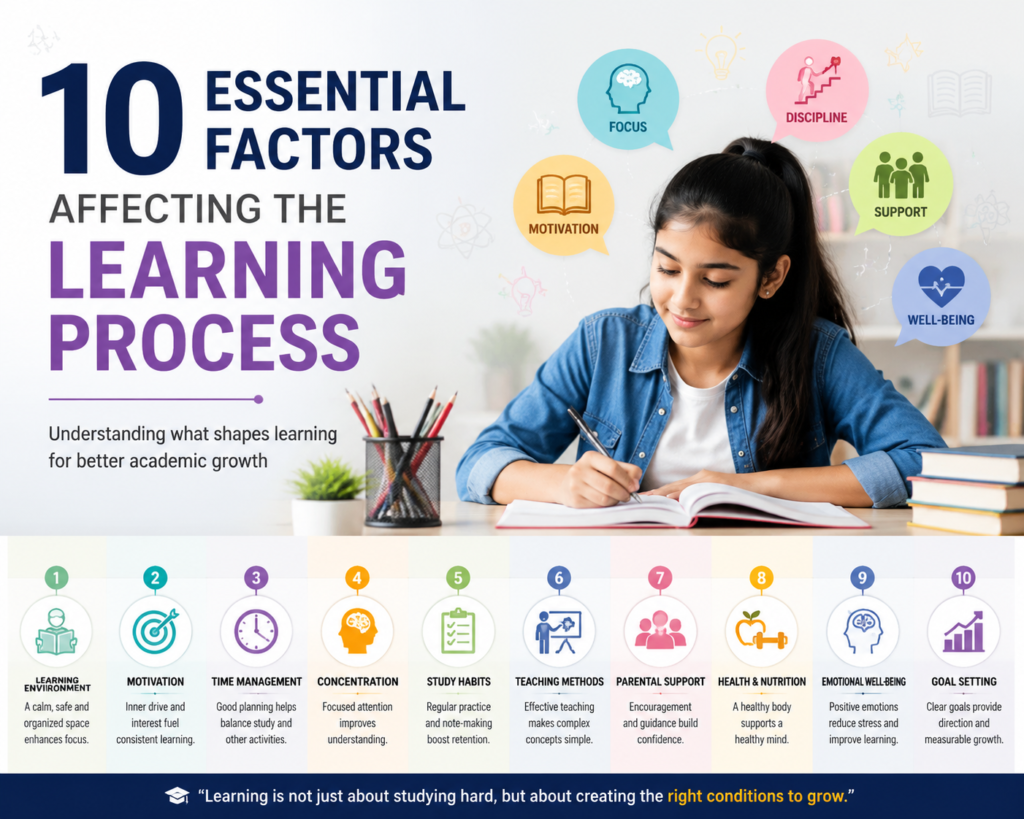
The learning process is influenced by a combination of psychological, social, and environmental factors. Students’ ability to acquire, retain, and apply knowledge depends not only on teaching methods but also on their motivation, habits, and well-being. Understanding the factors affecting learning is essential for parents, educators, and students to optimize educational outcomes. Whether in primary schools, high schools, or higher education, identifying and addressing these factors ensures that learning is effective, consistent, and rewarding.
In this article, we explore 10 essential factors affecting the learning process and their significance in shaping a student’s academic journey. We also examine factors influencing learning in psychology, factors affecting curriculum change, and strategies to overcome challenges like issues of learning English in India.
1. Motivation and Interest
One of the primary factors influencing learning is a student’s motivation and interest in the subject matter. Motivation drives students to engage actively in lessons, ask questions, and seek additional resources. Without interest or a sense of purpose, even the most capable students may struggle to retain information or perform well academically.
Learning process and motivation are closely intertwined. Intrinsic motivation—where students learn because they enjoy the subject or value the knowledge—is often more effective than extrinsic motivation, which relies on rewards or punishments. Teachers can enhance intrinsic motivation by connecting lessons to real-life situations, incorporating interactive activities, and allowing students to explore topics creatively.
For example, in subjects like history or science, practical experiments, field trips, or simulations make learning more engaging and meaningful. Similarly, setting achievable goals helps students track progress, maintain focus, and develop a sense of accomplishment, reinforcing the habit of continuous learning.
2. Psychological Factors of Learning
Psychological factors of learning play a critical role in academic performance. These include attention span, cognitive abilities, memory, emotional stability, and self-esteem. Students who are anxious, stressed, or lacking confidence often struggle to process and retain new information effectively.
Cognitive psychology highlights that learning involves processes like perception, memory consolidation, and problem-solving. When a student’s psychological needs are met—such as feeling safe, respected, and encouraged—the brain is more receptive to new information. Conversely, stress and fear can hinder attention, limit participation, and reduce retention.
For instance, factors affecting learning in psychology indicate that a supportive classroom environment, positive reinforcement, and acknowledgment of effort can significantly improve engagement. Educators should be mindful of individual differences and provide tailored support to students facing emotional or cognitive challenges.
3. Learning Environment
The physical and social environment is another key factor affecting learning. A conducive learning environment minimizes distractions, provides necessary resources, and fosters collaboration. Elements such as classroom lighting, seating arrangements, noise levels, and access to learning materials directly influence concentration and participation.
Research in educational psychology shows that students perform better in classrooms that are well-organized, clean, and equipped with interactive tools. Incorporating visual aids like charts, diagrams, and healthy habits charts can help reinforce concepts and create a structured learning space.
Beyond the physical setup, the social environment matters equally. Supportive peer interactions, respectful communication, and collaborative projects contribute to a positive atmosphere, motivating students to participate actively and confidently. Schools that prioritize these elements ensure that students feel valued, safe, and inspired to learn.
4. Teaching Methods and Curriculum
The strategies and curriculum adopted by educators are essential factors influencing learning. Effective teaching methods should cater to diverse learning styles, including visual, auditory, and kinesthetic learners. Traditional lectures may benefit some students, but interactive methods, group discussions, project-based learning, and experiential activities often enhance understanding and retention.
Factors affecting curriculum change also come into play. Curriculum should evolve to match students’ needs, technological advancements, and societal expectations. For instance, integrating digital literacy, environmental education, and communication skills ensures that students are prepared for contemporary challenges. Schools that adapt curricula based on student performance and feedback create a dynamic learning experience that motivates students and improves academic outcomes.
5. Time Management and Study Habits
Students’ study habits and time management skills are crucial factors of learning. Effective learners plan their day, allocate time for different subjects, and follow consistent routines. Regular revision, structured note-taking, and active practice reinforce learning and aid memory retention.
Encouraging students to adopt 8 steps of the learning process—from goal setting and attention to reinforcement and application—can improve efficiency. Practical strategies include setting aside dedicated study time, breaking tasks into smaller steps, and avoiding procrastination. Developing 5 good habits for class 1 or good habits for students like consistent reading, reviewing notes, and completing assignments on time creates a disciplined approach to learning.
6. Emotional and Social Support
A student’s emotional well-being significantly influences academic performance. Support from parents, teachers, and peers strengthens confidence, reduces anxiety, and fosters resilience. Factors influencing learning in psychology highlight the importance of encouragement, positive feedback, and mentorship in motivating students to persist through challenges.
Collaborative learning, group projects, and peer-to-peer tutoring also enhance social skills and reinforce understanding. Emotional support helps students manage stress and approach learning with a positive mindset, resulting in improved concentration, participation, and long-term retention.
7. Health and Nutrition
Physical health is an often-overlooked factor affecting learning in psychology. Proper nutrition, adequate sleep, and regular physical activity are vital for optimal cognitive performance. Students who maintain healthy routines are more alert, focused, and capable of critical thinking.
For example, students following a healthy habits chart that includes balanced meals, hydration, and exercise show higher energy levels and improved concentration during classes. Schools and parents should encourage students to prioritize their physical well-being as part of a comprehensive learning strategy.
8. Language Proficiency and Communication
Language proficiency, particularly in English, can be a major barrier for students in India. What are the major challenges of learning English in India? Students often face difficulties due to linguistic diversity, limited exposure, and insufficient practice. These issues of learning English can affect comprehension, participation, and academic confidence.
Addressing these challenges through remedial programs, reading practice, and language immersion activities is essential. Strong communication skills not only improve academic performance but also enhance social interactions and self-expression, contributing to overall learning success.
9. Cognitive Development and Concentration
Cognitive development and the ability to concentrate are fundamental factors influencing learning. Students who practice focused attention, critical thinking, and problem-solving exhibit higher comprehension and retention levels. Techniques like mindfulness, structured exercises, and active engagement during lessons strengthen these cognitive abilities.
Educators can implement activities that enhance concentration, such as timed quizzes, interactive discussions, and practical applications. Developing good study habits, including regular review sessions and breaking complex tasks into manageable steps, supports cognitive growth and improves academic outcomes.
10. Feedback, Assessment, and Goal Setting
Regular feedback and assessment are crucial factors affecting learning. Students benefit from constructive criticism, which helps identify weaknesses, reinforce strengths, and guide improvement. Feedback encourages self-reflection, adaptive learning, and perseverance.
Incorporating goal-setting practices, such as weekly objectives or long-term academic targets, motivates students to stay on track and develop a sense of responsibility. Assessment should be comprehensive, combining tests, projects, and practical evaluations to provide a holistic understanding of student performance.
Integrating All Factors for Optimal Learning
Addressing these 10 factors influencing learning requires a holistic approach. Teachers, parents, and students must work together to create a supportive and stimulating environment. Emphasizing motivation, cognitive development, emotional well-being, and structured routines ensures that students remain engaged, confident, and resilient.
Schools can also integrate strategies to overcome factors affecting curriculum change, ensuring that lessons remain relevant and adaptive to modern educational needs. Understanding psychological factors of learning and tailoring teaching methods accordingly enhances student engagement and promotes lifelong learning skills. By focusing on these elements, educators and parents at K.R. Mangalam World School Noida Extension, the best CBSE school in Greater Noida, can guide students toward lifelong learning and success.
Conclusion
The learning process is shaped by multiple interrelated factors, including motivation, study habits, emotional and social support, health, and teaching methods. Awareness of factors affecting learning in psychology, coupled with structured routines and goal-setting, empowers students to achieve higher academic performance. Addressing challenges such as issues of learning English in India or adapting to curriculum changes strengthens student competence and confidence.
By systematically applying these 10 essential factors affecting the learning process, educators and parents can cultivate disciplined, motivated, and resilient learners. This comprehensive approach ensures that students not only excel academically but also develop critical life skills for personal growth and success.